
 Translate
Multi-Axis Positioning Systems Manufacturing Capabilities
No Comments - Leave a Comment
The number of tasks that can be performed by robots are expected to increase from 10% to 25% meaning a much wider variety of systems are available to meet a range of applications, including automotive, aerospace, construction, consumer goods, defense, solar/ wind, industrial machines, packaging and more.
To achieve lower production cost and improve return on investment, manufacturers are adding custom single or multi-axis weld positioning units to their process. For example, with one IEC 61131-3-compliant automation program running on one processor, manufacturers move robots smoothly along on linear track systems while performing several tasks in the same cell.
With these new weld positioning systems, there is also the ability to adapt a current automation platform to new programs compared to adding totally new lines. This kind of activity is making automation more cost effective even for smaller production lines.
Thus, return on the investment can be achieved faster compared to even five years ago. But, before getting started down the road to automating some of your production operations here are two important questions the manufacturing team should ask:
1. Have you compared what your ROI would be on an automation system compared to your human labor costs for the same process?
2. Are you having a hard time filling jobs that are repetitive or dangerous or that could be carried out by automating it with a robot?
If you answered yes to both questions, then you should consider adding custom multi-axis positioning system to your production lines to increase the capabilities of your robots.
Depending on your specific application, a custom multi-axis positioning system for manufacturing might include a combination of linear, rotary and slide stages.
LINEAR:
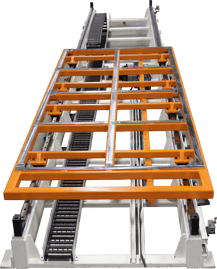
Linear stages are made up of slides providing an accurate and limited positioning along one dimension joined by a guide that contains the motion of the platform. Be sure to discuss with your vendor the different styles of guides as some are better in some applications compared to others. Motion Index Drives ILM Transfer System moves the tooling to the robots so they can perform a programmed operation on them. ILM Tool Tray Transfer Systems can be custom designed and manufactured to fit the customer’s application and work within the constraints of their automation facilities. ILM tool tray transfers utilize a two way key system that perfectly aligns joined ends, enabling the overall length of a system to be limitless.
ROTARY:
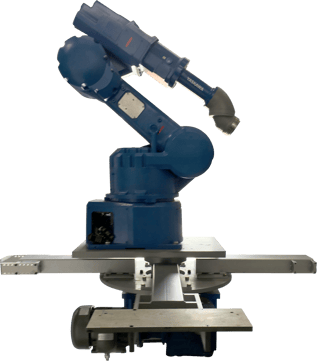
Rotary Indexer stages consist of a structural frame or simple dial plate. Some manufactures offer a rotary stage consisting of a hollow center and stationary robot base to allow for mounting a robot or robots directly above rotating frame or dial plate. This unique advantage joins the rotary stage and robot together, eliminating the need to mount and level to the floor. This also save on floor space. LazerArc rotary stages can be manufactured to accept any robot manufacturer to give that additional rotary axis to your robot.
SLIDES:
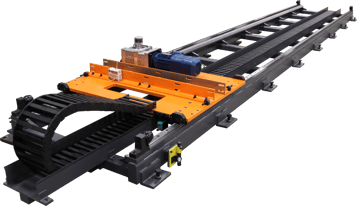
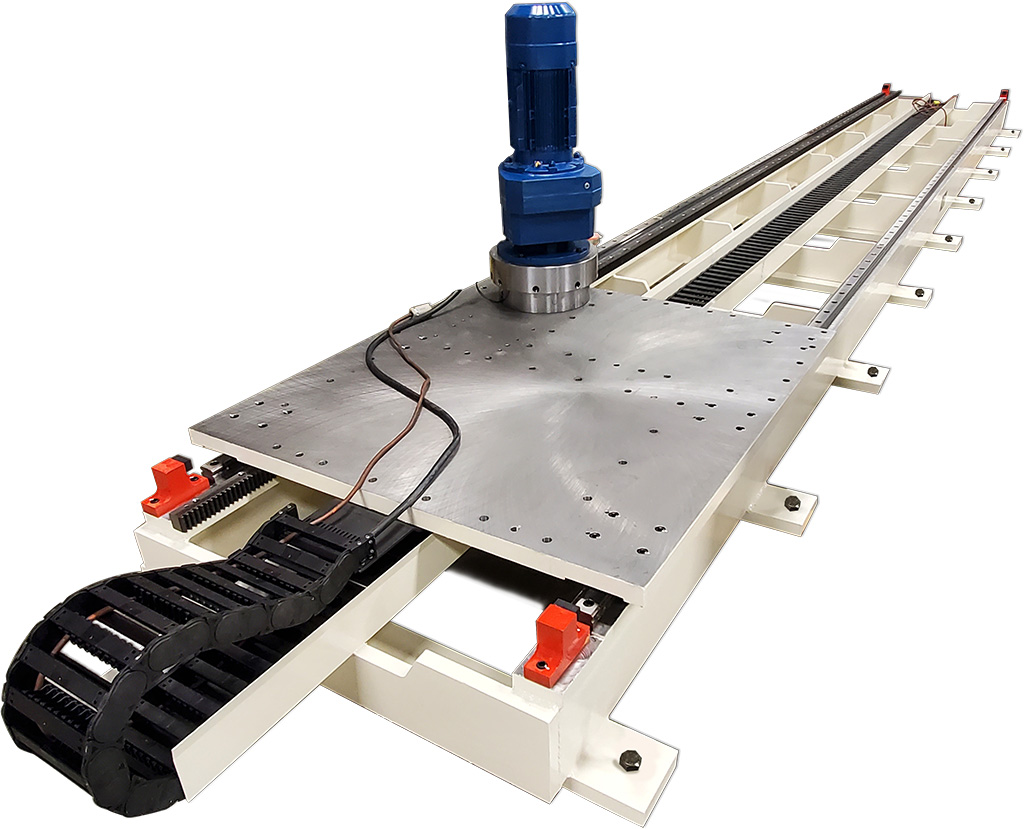
The 7th axis slide function is to provide an accurate motion and position on the line. Our designs enable the customer to utilize any robot brand. We custom build and engineer the system to the customers exact needs. These Robot Transfer Units are equipped with heavy duty low friction linear bearing systems. Slides are most commonly used in automated material handling applications, and welding applications in Aerospace and Automotive industries.
SELECTION CRITERIA
Before selecting a a single or multi-axis positioner you will need to perform a full analysis of your production process such as:
- Maximum travel of the robot on the line
- The angles the robot will need to perform the desired processes
- Payload capacity of current and future products
- Axis height
- Bearing types, as they always will need to be selected for the specific application
- Best actuators to control or move the mechanism or system.
- Correct material (steel, aluminum, etc.) needed to build the equipment to ensure long-term performance.
- Bearings are also an important consideration as they will increase the performance of a linear, rotary, or slide stages.
Next choose from a variety of multi-axis positioner systems now available for your specific manufacturing production needs based on your answers above such as:
1 Single Axis systems are for applications where high speed, high acceleration or high accuracy is required. Some options of single axis positioning systems include rotary index tables, headstock / tailstock, adjustable weld positioner, lift units and tool tray transfers
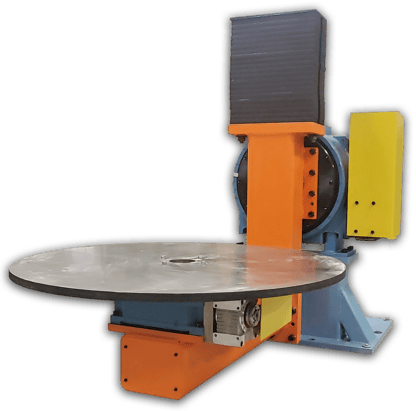
2 Axis positioning systems typically put the base of the top axis and bolt it to the slide of the lower axis. Two axis systems can be designed to lift/rotate, lift/rollover, sky hooks and move vertically and horizontally.
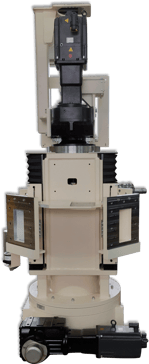
2 Axis lift and rotate multi-positioning system
3 Axis are used to rotate a part or tooling on one end and at the same time the opposite end can be rotated or safely assessed. A few of the available options include a rotary, trunnions, triple dex satellite, skyhooks, trunnion lift/ rotate and ferris wheel for large parts that can be welded using the flexibility of reorientation.
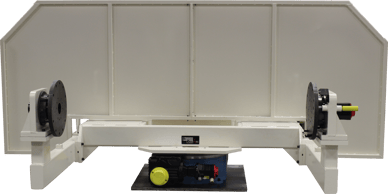
4-5 Axis improves quality by allowing you to complete a task in a single set up and create multiple and complex shapes without losing the precision. Most applications include sky hooks and five axis positioners.
7 Axis can be manufactured in floor mounted, elevated or inverted configurations. The advantage of 7th axis robotic slides is that more than one robotic arm can be placed on the same slide for additional productivity and flexibility. They can also be engineered to any length the customer requires. The design incorporates machined keyed ends allowing for sections to be added or removed easily, when repurposing.
For more information on Custom Multi-Axis Weld Positioning Systems visit: https://resources.motionindexdrives.com/guide-to-weld-positioners
Comments
No Comments - Leave a Comment