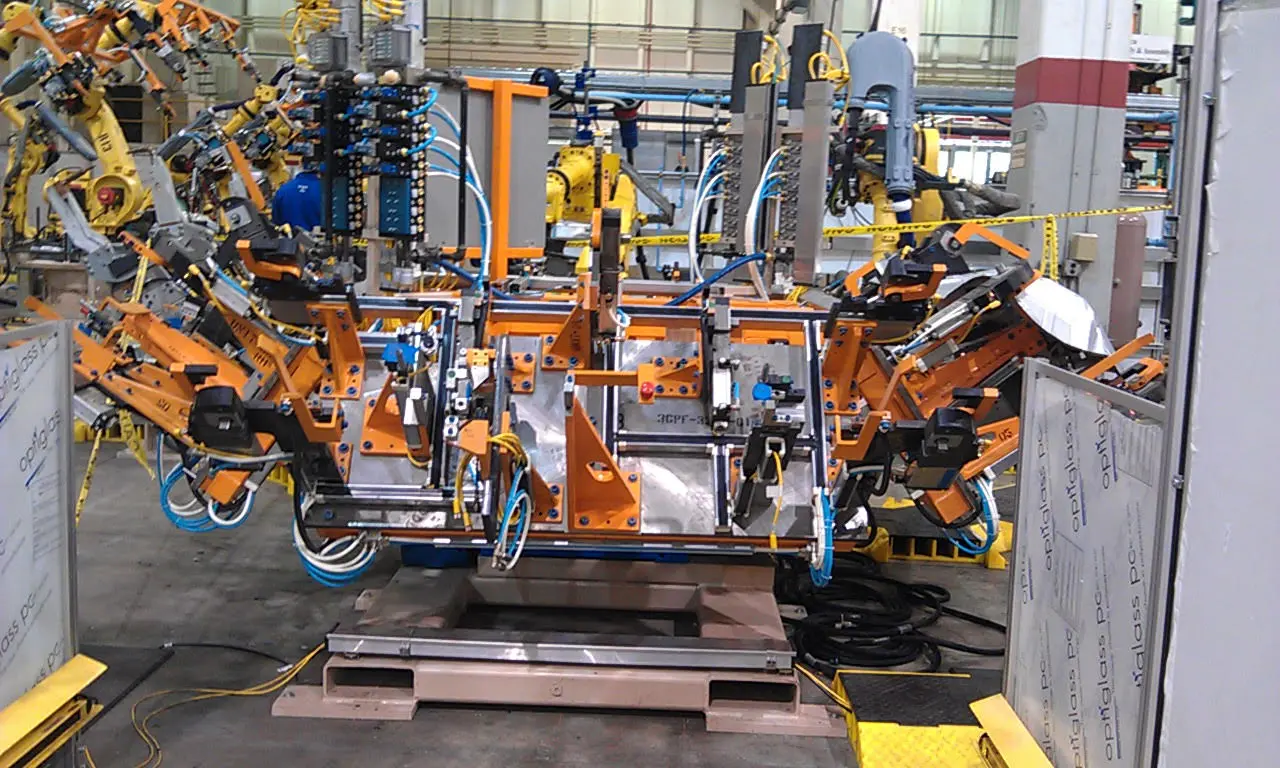



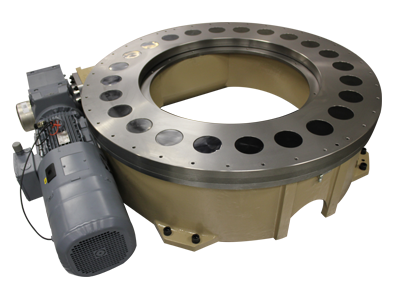
Rotary index tables are a foundational technology in automated production lines where speed, precision, and repeatability are critical. From automotive assembly to EV battery manufacturing and medical device production, rotary indexing systems enable manufacturers to increase throughput while maintaining tight tolerances and high uptime.
At Motion Index Drives, rotary index tables are engineered as high-precision motion platforms that integrate seamlessly with conveyors, robotics, and complete automation systems.
This article explains the key advantages of rotary index tables, how they improve production efficiency, and when they are the right choice for a manufacturing line.
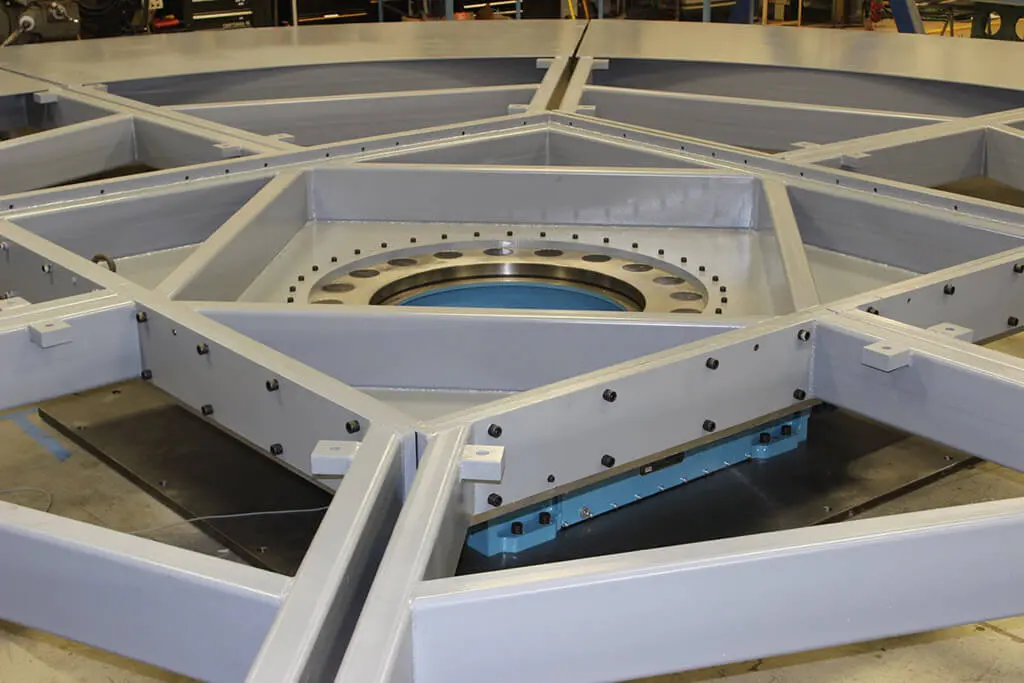
A rotary index table is a mechanical positioning device that rotates parts through a fixed number of stations using precise, repeatable indexing motion. Parts are mounted on fixtures or tooling plates and moved sequentially through operations such as:
Each index stops at an exact position, allowing operations to occur simultaneously at multiple stations.
One of the biggest advantages of rotary index tables is simultaneous operation. While one station loads parts, others can assemble, inspect, or unload at the same time.
This parallel processing allows manufacturers to:
Compared to linear transfer systems, rotary indexing delivers more work in less floor space.
Rotary index tables are designed for tight positional tolerances, often eliminating the need for secondary locating devices.
Key benefits include:
This precision is critical for applications involving robotics, vision systems, or tight assembly tolerances.
Overall Equipment Effectiveness (OEE) improves when motion is predictable and mechanically controlled.
Rotary index tables offer:
Fewer moving parts compared to complex transfer systems results in:
Rotary index tables allow multiple processes to occur around a single platform. This circular layout:
For manufacturers facing space constraints or expanding production within existing facilities, rotary indexing provides maximum output per square foot.
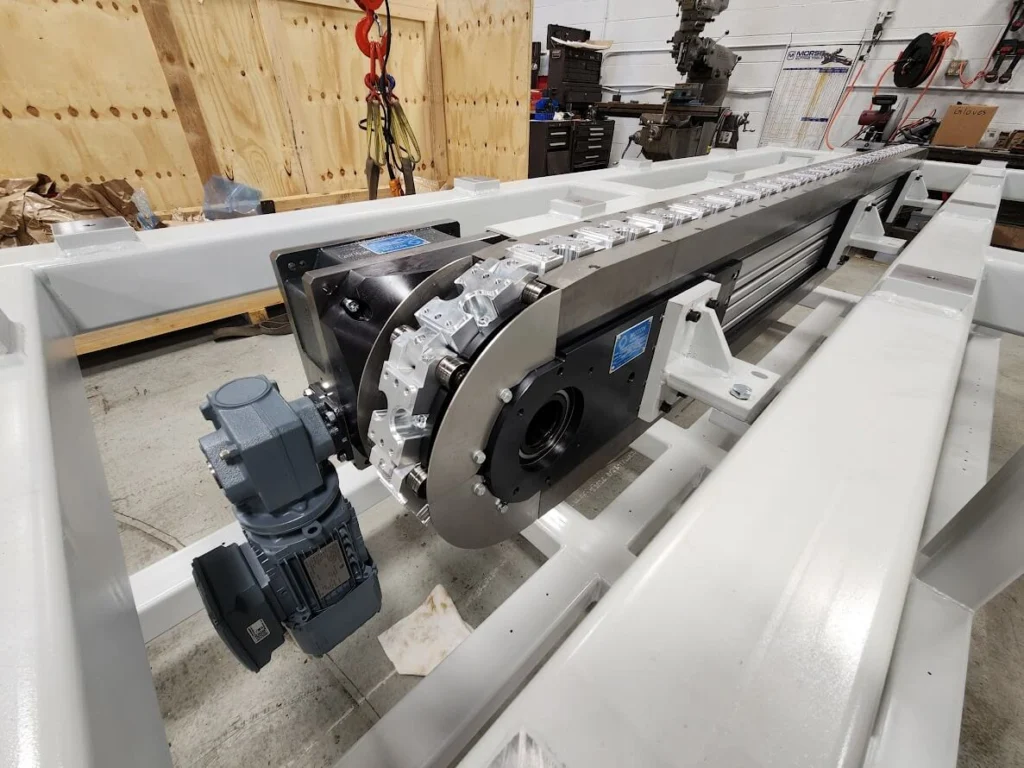
Rotary index tables are inherently automation-friendly and integrate easily with:
Because index positions are fixed and repeatable, automation engineers benefit from:
Rotary index tables support modular station design, allowing manufacturers to:
This makes rotary indexing ideal for:
While rotary index tables are a capital investment, they reduce long-term operating costs by:
Over the life of the equipment, this results in a lower cost per part and faster return on investment.
Rotary index tables are best suited for production lines that require:
Common industries include:
In modern production environments, efficiency is engineered—not improvised. Rotary index tables provide a proven, reliable way to increase throughput, improve quality, and simplify automation integration.
When combined with precision conveyors and custom automation, rotary index tables become the backbone of scalable, high-performance production lines.
Rotary index tables are more than motion components — they are the backbone of efficient, scalable automation. Whether you’re designing a new line or upgrading an existing one, the right indexing solution can dramatically improve throughput, repeatability, and uptime.
At Motion Index Drives, we engineer rotary index tables, precision conveyors, and fully integrated automation systems tailored to your production requirements.
👉 Talk to an automation expert
👉 Explore rotary index tables and integrated conveyor solutions

